Looking back at 2024, the European logistics market didn't just grow—it caught fire. We saw transaction volumes jump 28% year over year, reaching a massive €40 billion. The UK led the charge with over €12 billion in investments, but the real "super-growth" stories were in France and the Netherlands, where volumes soared by 54% and 23%.
What is this article about?
Table of Content
Beyond just moving boxes, the smart money went into digital tech. Here’s why that mattered:
- The Bottom Line: Advanced digital tools slashed costs by nearly 7% and boosted revenue by almost 8%.
- The ROI: Most facilities saw these investments pay for themselves in just 1.8 years.
- The Data Play: Better visibility gave managers the high-quality data they needed for real planning, with AI now stepping in to support analytics.
- Labor Optimization: Instead of just replacing people, tech acted as a "force multiplier," allowing existing teams to handle 25% more volume without increasing headcount. Simply put, you need less people, less actions to do the same job.
draggable-hero color-white
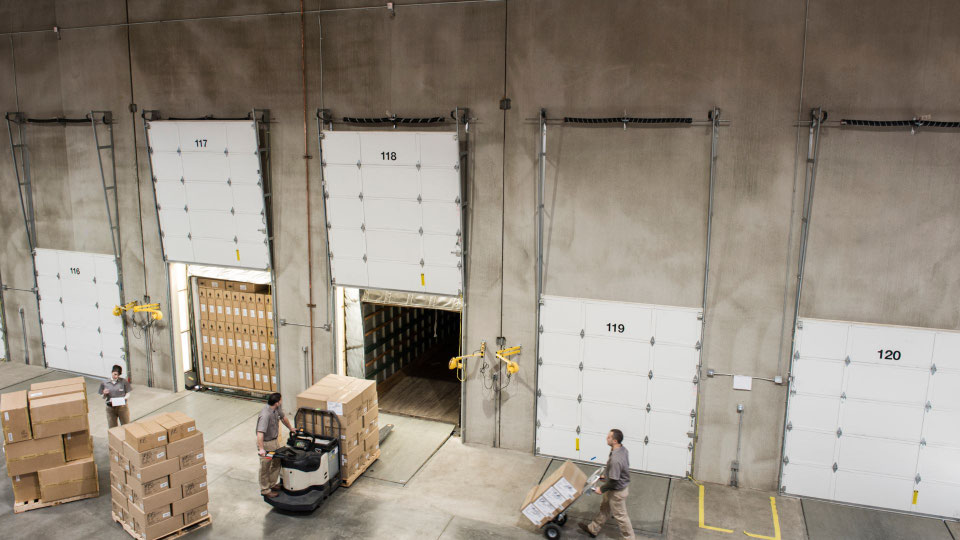
Could you risk the 2026 Reality Check?
Fast forward to where we are now in 2026. All that capital and inventory have created a bit of a "good problem," but a problem nonetheless. We’ve hit a major bottleneck: the loading dock.
With record-breaking volumes moving through the system, there is zero margin for error. Dock scheduling used to be a quiet, back-office task, but today it’s the ultimate "must-have." If a facility wants to actually turn all that market growth into profit, mastering the dock is no longer optional—it’s the engine room of the whole operation.
Download a free list of more than 100 logistics events in 2026
Why Dock Scheduling is the 2026 "Must-Have"
According to data from the PwC Digital Champions 2025 report and current 2026 logistics trends, the loading dock is no longer just a physical gateway—it is the ultimate data anchor for the autonomous ecosystem.
1. The "Digital Champion" Mandate
Digital Champions (the top 9% of supply chain leaders) are outperforming "Digital Novices" by focusing on external integration and end-to-end orchestration.
- The Cost Factor: Digital Champions achieve 6.8% annual savings in supply chain costs.
- The Revenue Factor: They see a 7.7% increase in revenue by maximizing throughput.
- The Connection: You cannot orchestrate an "autonomous" ecosystem if the physical handover (the dock) remains a manual "blind spot." Dock scheduling is the bridge that connects digital planning with physical execution.
2. Smart Logistics as the Primary Savings Driver
In the 2026 landscape, "Smart Logistics" is rated as the top priority for industry leaders.
- 50% of Total Savings: Digital Champions attribute over half of their total supply chain cost savings to smart logistics flows.
- Eliminating "Blind Handoffs": Inefficient dock transitions (blind handoffs) can account for 13% to 19% of total warehouse costs.
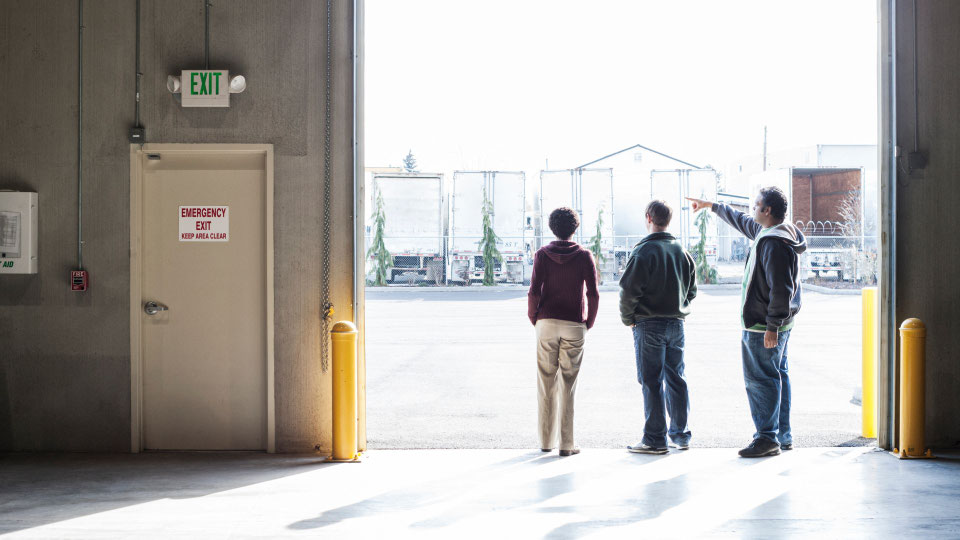
3. Synchronized Real-Time Planning
The era of static, weekly schedules is over. In 2026, leading organizations have moved to Closed-Loop Planning.
- Execution Sync: 72% of Digital Champions have implemented E2E planning that synchronizes with execution in real time.
- The Dock's Role: Without automated dock scheduling, your "real-time" plan breaks the moment a truck is 15 minutes late. Modern systems allow for "self-healing" schedules that automatically re-prioritize dock doors based on real-time GPS data.
4. Transparency as a Sustainability Catalyst
Sustainability and ESG reporting are now "table stakes" in 2026.
- Visibility Priorities: Over 50% of leaders rank supply chain transparency as a high priority.
- Idle Time Reduction: Dock scheduling systems can reduce carrier dwell times by up to 3x. This directly translates to lower CO2 emissions from idling trucks, a critical metric for 2026 sustainability audits.
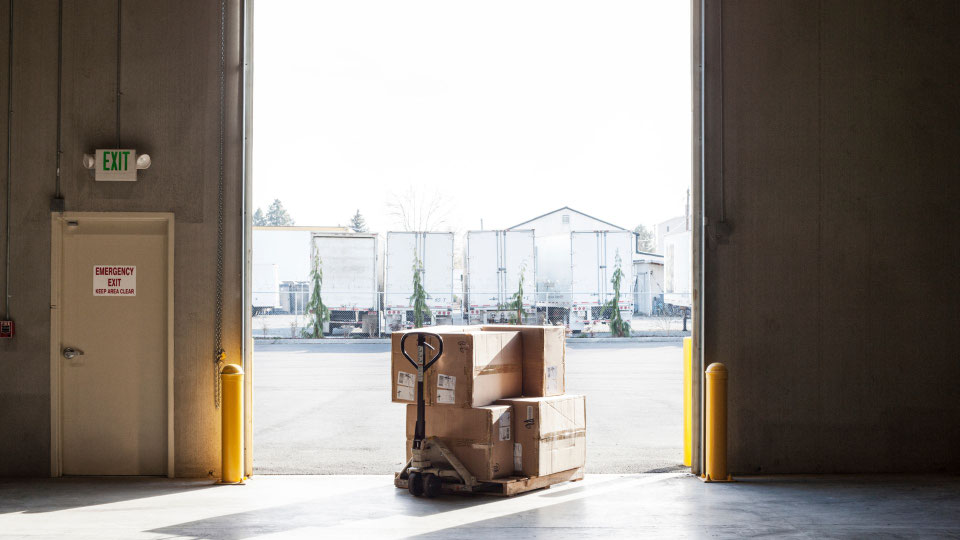
5. AI-Driven Decision Making
AI is no longer a pilot project; it is the new norm. Digital Champions use AI 2-3 times more extensively than their peers.
- Predictive Scheduling: In 2026, dock systems use AI to predict "No-Shows" or "Late Arrivals" before they occur, enabling the warehouse to adjust labor allocation dynamically.
- Labor Optimization: By smoothing out "peaks and valleys" in truck arrivals, warehouses can optimize their workforce, avoiding the 2026 labor shortages that plague un-automated facilities.
Dock Door Congestion in Warehouse Logistics
Looking backward, dock door congestion has been managed through simple methods. Well, it is most notably First-Come-First-Served (FCFS) scheduling. While easy to implement, these methods are often inefficient because:
- Variable Sensitivity: They ignore the volume of goods and specific vehicle sequencing requirements.
- Reactive vs. Proactive: Because throughput fluctuates seasonally and weekly, managers are often stuck in a "reactive" cycle, solving bottlenecks only after they occur.
- Underutilization: Poor bay assignment results in "dead time" at some doors, while others experience long queues.

Cross-docking
The transition to a cross-docking distribution center (DC) provides a clear path toward operational excellence. The findings are summarized below:
- Foundation: Successful design begins with a detailed audit of existing warehouse workflows to identify constraints and map new, sequential task arrangements.
- Methodology: Requirements must be validated through stakeholder interviews, ensuring the DC design addresses practical operational needs.
- Efficiency: The cross-docking model reduced processing time by 12%, resulting in faster distribution and lower overhead.
There is no good dock scheduling without efficient yard management
To establish a benchmark for maximum achievable benefits, the ETA-based reactive truck scheduling approach was evaluated using "perfect information." In this scenario, the Estimated Time of Arrival (ETA) is assumed to equal the Actual Time of Arrival (ATA), with all data available to the facility at the start of the operating day.
System-Wide Impacts
The reduction in waiting times translates directly into enhanced system performance and operational fluidity:
- Yard Efficiency: Decreased congestion leads to higher resource and space utilization.
- Throughput: Optimizing door occupancy speeds up the turnover of goods.
- Sustainability: Lower emissions from idling trucks and reduced driver stopover times contribute to both environmental and social responsibility goals.
Scheduling Stability
The system's dock scheduling reliability was also put to the test. When comparing the ETA-based entry times against the drivers' original booked slots, the stability of the schedule was remarkable:
- 96% of trucks were served before their unloading slot ended.
- 76% were served exactly within their booked window.
- 20% were served ahead of schedule.
Conclusion: Dock Scheduling is the 2026 "Must-Have"
The transition from 2024’s investment surge to the operational realities of 2026 has made one thing clear: the loading dock is no longer a back-office afterthought—it is the strategic engine room of the modern supply chain. As transaction volumes hit record highs and the margin for error vanishes, mastering the dock has moved from a "competitive advantage" to a fundamental requirement for survival.
These results confirm that while data-driven scheduling is a powerful catalyst for efficiency, it does not exist in a vacuum. The data proves a fundamental logistical truth: there is no good dock scheduling without efficient yard management. True optimization requires seamless synchronization between incoming data and the physical movement of assets within the yard.

Your go-to B2B Presales Agency
Unleash the full potential of your brand with Expler, a leading pre-sales agency and B2B marketing experts. Increase your presence with compelling marketing and effective pre-sales
approache. Contact us now and let us help you transform your brand narrative into a captivating visual experience. Use this great approach to capture the attention of your audience
and business community at events and trade shows.
is-switcher
Main colors
| bg-primary | |
| bg-primary-light | |
| bg-primary-dark | |
| bg-secondary | |
| bg-secondary-dark |
Template sections
| body | |
| top-header | |
| header | |
| content |
Footer Styles
| background | |
| text color | |
| link color | |
| horizontal line |
Buttons
| style 1 | |
| style 2 | |
| style 3 | |
| text color |
Other elements
| social icons | |
| navigation color | |
| subnav background |
Mobile navigation
| background color | |
| navigation color |
| Template configurations |
| has-right-nav g-font |
| Navigation styles |
| size-15 weight-400 snip-nav |
| Content styles |
| form-white mid-round-btn |
| Footer styles |
| o-form color-white |
|
Typography |
| Heading H1 |
| weight-700 |
| Heading H2 |
| weight-700 |
| Heading H3 |
| weight-700 |
| Buttons |
| weight-400 |
| Animations |
Note: All changes made here will be applied to your entire website.
is-switcher

draggable-logo

About
B2B Sales and Marketing & Expler
We are the go-to solution for B2B Sales and Marketing. We provide dedicated presales services and digital marketing services.
Partners